Mr. Samuel Udoh, Chief Administrative Officer of the National Assembly of Nigeria, participated in the “Belt and Road” International Seminar on Smart Transportation and Infrastructure hosted by the Ministry of Commerce of China and organized by its Academy for International Business Officials (AIBO) in 2025. Upon returning to Nigeria, Mr. Samuel was profoundly impressed by China's development. Drawing on his insights from the seminar and considering Nigeria’s current development status, Mr. Samuel authored a book titled “China’s Economic Miracle: Perspectives and Insights for African Nations”. This book systematically reviews China’s economic transformation journey from 1949 to the present, with a particular focus on the period since the reform and opening-up dated in 1998. Mr. Samuel delves into the multiple pillars underpinning China’s economic transformation, including a strong sense of sovereignty and national vision, institutional reforms that unleash vitality, the establishment of opening-up windows tailored to local conditions, and forward-looking talent strategies for future industries. Through this systematic analysis, Mr. Samuel presents a vivid blueprint for African nations on how to transition from resource-dependent economies to modern industrial systems, offering valuable perspectives and logical frameworks for participants in China-Africa economic cooperation. Mr. Samuel has kindly requested that our institute continue to share his thoughts.
I. Historical Coordinates: The “Twin Cities Dislocation” of 1980
At the outset of this writing, the stark contrast between Lagos in 1980 and Shanghai in the same year springs to mind. I believe this comparison can offer African readers an intuitive grasp of the profound impact of different development paths.
In 1980, Lagos, as the “Oil Pearl” of West Africa, was riding high on surging oil prices. It was a city brimming with confidence, its per capita GDP reaching approximately $1,130—far exceeding that of China at the time. The city was awash with the illusory prosperity brought by petrodollars. In Shanghai that same year, however, the streets were filled with a sea of bicycles. Its per capita GDP was a mere $195, and Pudong district was still a vast expanse of farmland dotted with scattered farmhouses.
Fast forward forty years, and Shanghai has transformed into a global financial center and a hub for high-end manufacturing. By 2023, its GDP exceeded $650 billion. Meanwhile, despite a surge in population, Lagos continues to grapple with power shortages and a weak industrial base, its GDP amounting to less than one-sixth of Shanghai's. In my view, Lagos mistook consumer-driven prosperity for the engine of development, whereas China chose a more arduous path—deeply cultivating productivity. This strategic shift from “resource-dependent trade” to “manufacturing-driven growth” offers a crucial lesson on the transformation of economic and trade structures.
II. The “Laboratory” of Economic and Trade Policy: Special Economic Zones and Institutional Stability
From my perspective, China's experimentation with Special Economic Zones (SEZs) holds significant value as a policy reference. The key to China’s success lay not in blindly following external prescriptions, but in its courage to “cross the river by feeling the stones”.
I am particularly struck by the model of localized piloting and spillover effects. By establishing SEZs like Shenzhen, China created laboratories for market-oriented policies, conducting "stress tests" on fiscal and tax systems, and foreign investment regulations. This approach effectively mitigated the overall risks associated with systemic institutional transformation, ensuring a smooth transition, and subsequently allowed successful experiences to be replicated nationwide.
On a deeper level, it underscores the importance of policy resilience and sovereign will. Reflecting on the trials of modern history, I believe these experiences fostered in modern China a firm determination to safeguard its sovereignty and pursue national rejuvenation. This will has consistently enabled China to maintain the initiative in its development when facing external economic pressures. For Africa, establishing a long-term, stable business environment holds far greater strategic significance than isolated infrastructure projects.
III. The Underlying Logic of Industrial Upgrading: Market Dynamics and the Demographic Dividend
In the book, I devote considerable space to discussing how China, leveraging its massive domestic market, explored a range of pragmatic economic and trade practices that propelled its industrial leapfrogging.
First is the practice of “exchanging market access for technology.” Using the high-speed rail industry as a case study, I analyze how China, through stipulations in large-scale contracts, compelled multinational corporations to facilitate technology transfer, ultimately achieving a closed loop of “introduction, digestion, absorption, and re-innovation.” This strategy provides a valuable model for African nations seeking to enhance their own industrial security when attracting foreign investment.
Second is the transformative impact of prioritizing STEM education. The point I wish to emphasize is that China wasn’t just building factories; it was also “building its people”. With approximately 40% of Chinese university undergraduates majoring in STEM fields, and the country leading the world in STEM doctoral output since 2021, the logic is clear: “Infrastructure is the skeleton, but human capital is the lifeblood”. This long-term investment in human capital is the fundamental guarantee that enabled China's economy and trade to successfully integrate and ascend the global high-end industrial chain.
IV. Conclusion: An Extended Perspective–Jointly Forging a New Chapter in Modernization
I believe China’s story demonstrates that a nation’s destiny is not predetermined by its starting point. In my view, the greatest gift of the Chinese experience to Africa is not a ready-made template to be copied, but rather a logical framework centered on “autonomous development”.
This unique “Chinese experience” is now taking root in a more dynamic way through practical China-Africa economic and trade cooperation. I have always maintained that Africa must confront and resolve its “infrastructure deficit” in the digital age; otherwise, it risks permanent marginalization in the Fourth Industrial Revolution.
It is encouraging to see that with the full implementation of the “Ten Cooperation Plans”, the “African vision” I envisioned years ago is becoming a reality:
On industrialization, China is assisting Africa in translating its “SEZ experience” into local productive forces.
On trade, African agricultural products are entering the Chinese market through “green lanes”, marking a shift from resource exports to higher value-added commerce.
On human capital, addressing my concerns about a “talent vacuum”, Luban Workshops are equipping African youth with crucial digital skills.
The China Miracle, at its core, is about pragmatism, sovereignty, and a long-term vision. I am confident that the new era of China-Africa relations can, through mutual benefit and win-win cooperation, co-author the next magnificent chapter in modernization. This is not merely an upgrade of China-Africa economic and trade ties; it is the inevitable choice for China and Africa to stand together in solidarity and jointly create brilliance amidst the tides of modernization.
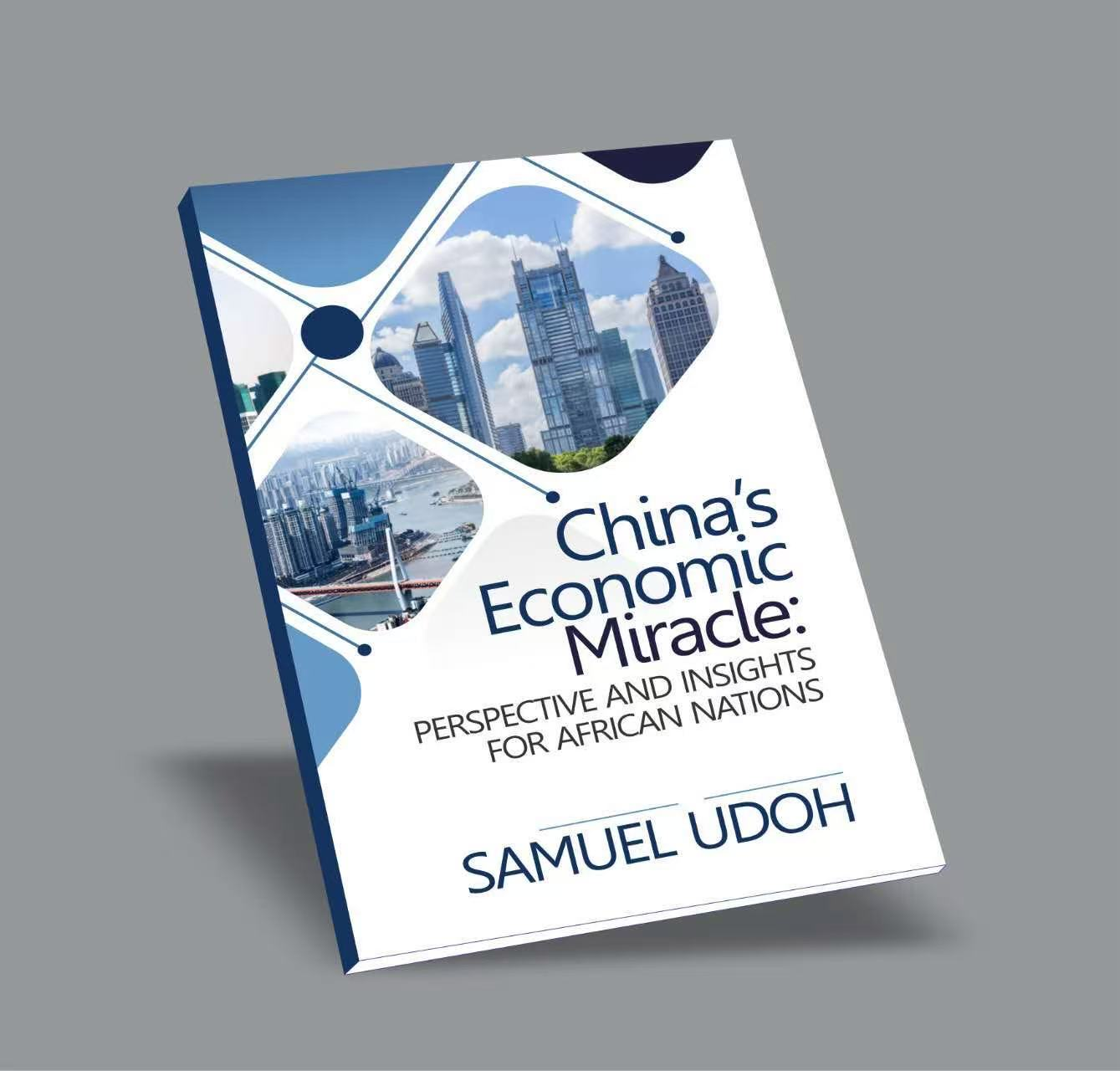
The book The History of China’s Economic Miracle: Perspectives and Lessons for African Nations


