Where Borders Fade and Hands Are Joined
An Ode to AIBO and a Shared Tomorrow
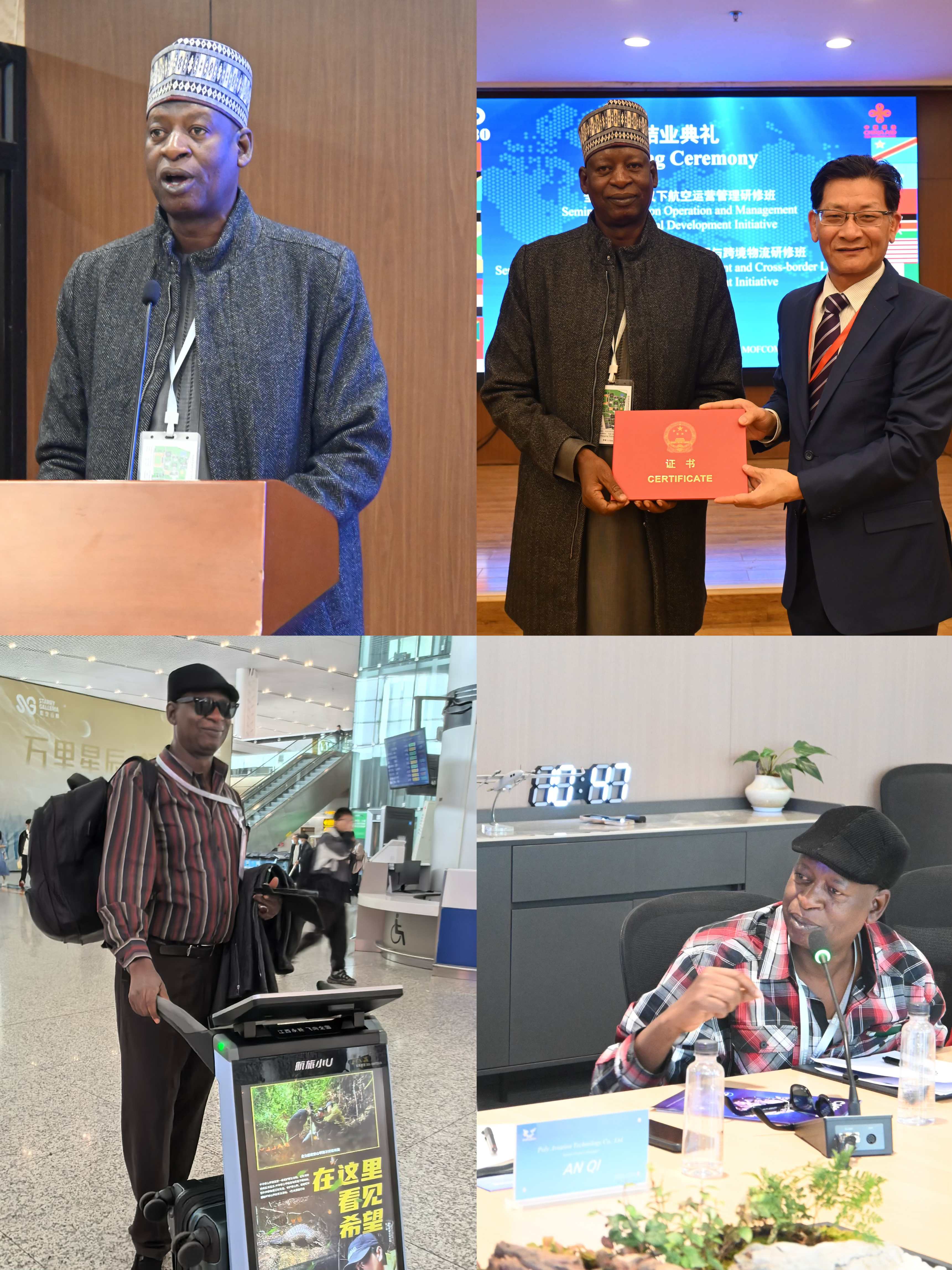
El-Yakub Lame USMAN(Nigeria)
It started with one truth.
Xi Jinping said, “We share one future, or we have none.”
He called it a community with a shared future for all.
Rain in Beijing, wind in Bangui same sky.
A child coughing in Juba, a child studying in Shanghai same air.
If one falls, we all feel it.
If one rises, we all get shade.
This isn’t about the strong giving scraps to the weak.
It’s about one ship.
If one room floods, the whole ship tips.
If the top is rich and the bottom rots, it still sinks.
Peace, safety, growth they only last when shared.
That’s why a shared table matters more than a prize.
Not a conquest.
Not a deal.
A promise.
No table full while another stays empty.
No sky owned until every child can name a cloud.
From that promise, AIBO was born.
The Academy for International Business Officials.
No golden doors. No marble floors.
Just open rooms, open hearts, and one question:
“What do you need to stand?”
In those rooms, a man from Juba and a woman from Liberia
shared one pencil and one century.
This is South-South Cooperation with a heartbeat.
This is how it learned to walked in a retrospect.
February 18, 2022. Winter in Beijing.
But the screens felt warm.
Eleven seminars. Over 500 people from 23 countries.
They came to erase the word impossible.
China didn’t bring answers in its pocket.
It brought an empty cup: “What are you thirsty for?”
Then it gave a compass: “North is yours to name.”
July 7-8, 2022. The second light.
Eight rooms. 233 faces.
People from Congo who once borrowed laws
picked up a pen and wrote their own.
China asked again: “How do you dream when no one watches?”
And gave a net: “The sea is yours to feed.”
April 2026. The sky became the classroom.
Not the whole world.
Just two cities: Beijing and Chongqing.
In Beijing, participants walked through Daxing and Capital.
They saw airports that move with the city.
Trains meet planes.
Signs guide you.
Lines flow without shouting.
A hundred million travelers, and still calm.
They learned that good design is kindness you can see.
That a first-time flyer should feel safe, not small.
That an airport can be a door, not a wall.
Then they went to Chongqing.
The mountain city.
Built on hills and water.
Here the airport grows with the land, not against it.
Terminals link to metro and road.
Cargo moves from runway to factory in minutes.
And below it all, the Yangtze runs wide and steady.
On the Yangtze, they saw the advantage.
Air comes down.
River goes out.
Road and rail tie them together.
Goods land at Jiangbei, clear customs in the free trade zone,
and sail onward by barge.
One system. Four ways to move.
Cheaper. Faster. Cleaner.
A small workshop can ship Monday and reach the sea by Friday.
In Chongqing, the participants saw an airport city rise.
Factories, warehouses, markets around the runway.
Jobs following the planes.
They called it Aerotropolis.
Not a plan on paper, but real lights at dusk.
They asked, “What if our airport made jobs, not just trips?”
Beijing gave order and grace.
Chongqing gave connection and flow.
One showed how to move people well.
The other showed how to move goods better.
Together, they showed how air, rail, road, and river can work as one.
This is Xi’s idea: shared development for shared humanity.
No longer words on paper. Now in participants’ hands.
2022 gave a compass.
2022 gave a net.
2026 gave a flight plan over Beijing and Chongqing.
Eleven nations came last April 2026.
Some took home the city that grows from the airport.
Some took home the road that meets the river.
Some took home the quiet order of a gate that works automatically without segregation.
AIBO Academy by name.
Bridge by blood.
Help by hand.
Family by choice.
April 2026, reinforced the lesson again:
The sky isn’t a roof for the poor and a floor for the rich.
The sky is a table.
And there’s a chair for everyone.
So keep the doors open.
Keep the lights on.
Let the boy from Torit take a train to his gate.
Let the mother from Kinshasa sell from an airport city.
Let the grandfather from Yap walk a cool path to his plane,
sit by the window, and see a world held by hands,a metaphor of the Chinese concept.
Hands that met in Beijing and Chongqing and chose to share the air.
Participants thank China, from the heart.
Other strong nations use power to press down the weak.
They take land, oil, futures, in a broad day light and call it growth.
China walks another road.
It remembers struggle and rising again.
From that pain, it built knowledge.
From that struggle, it built strength.
Now it opens its hand.
It shares what it learned.
It teaches how to build in contrast to its contemporaries, who coerced and intimidate.
It gives its precious time, money, skill, so others can stand too.
This is shared development for shared humanity.
No one forced. No one taken from.
Participants are taught, trusted and lifted.
For this kindness, participants say thank you.
For choosing to build with us, not break us, participants say thank you.
Participants’ children will remember this huge and un quantified contribution for shared humanity.
Elyakub Usman Lame wrote this piece of poem, from Nigeria as one of the participants in the last April, 2026 Aviation management course, held at AIBO Academy in Beijing.