WHY CHINA?
Since my elementary school years, one proverb in Indonesia has echoed repeatedly in my ears “Seek knowledge even as far as China.” It is a classic piece of wisdom encouraging us to pursue education as far and as high as possible, regardless of the distance. As a child, I often wondered: Why China? Why not another country? People said that China was a great center of civilization and knowledge, as well as a symbol of a place unimaginably far away. Yet, it was only recently that I truly found the answer to that childhood question.
FIND AND UNDERSTAND THE MEANING
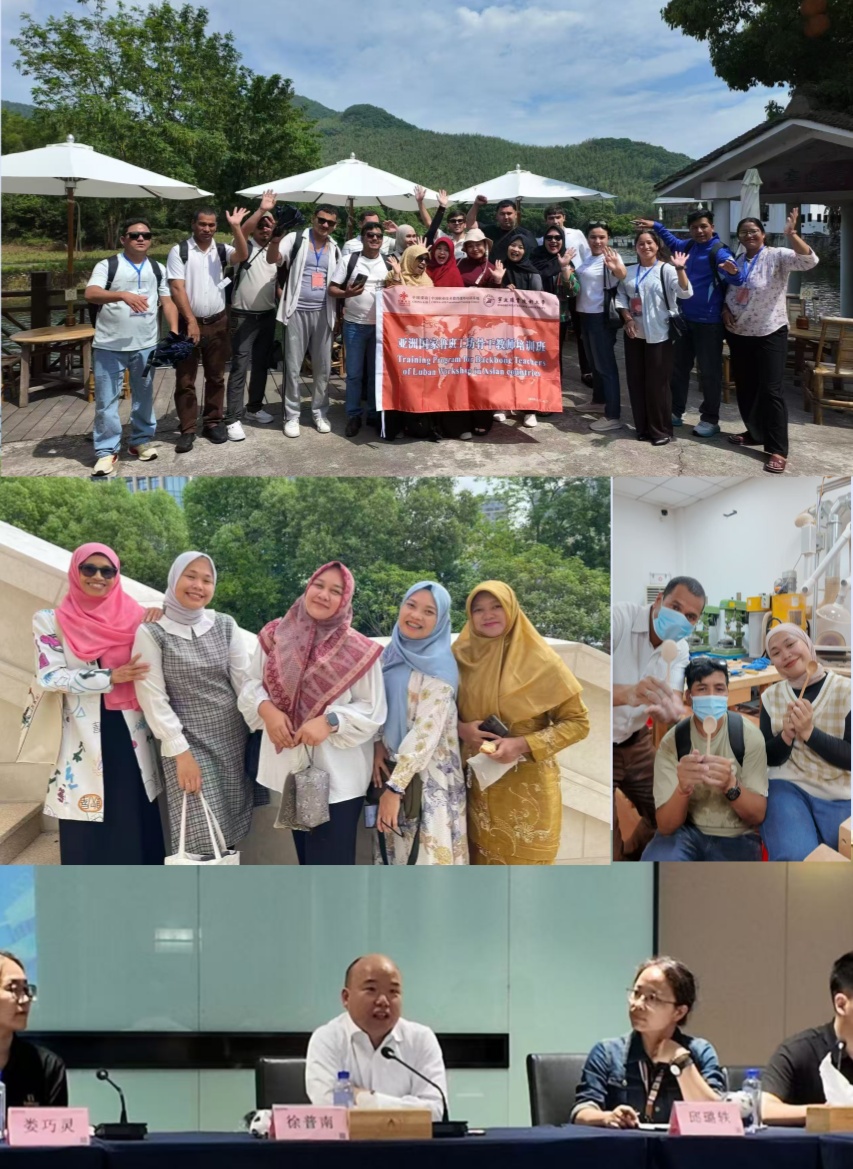
The golden opportunity to study for fourteen days at Ningbo Polytechnic University (NBPU), China, became a turning point that allowed me to fully grasp the meaning behind this proverb. Witnessing firsthand how educators and practitioners shared their knowledge made me realize why this country has long been regarded as a destination for learning and intellectual pursuit.
My reflective journey began by exploring Chinaʼs historical development. I was curious about how a nation could rise from poverty and transform itself into a global powerhouse of innovation. This curiosity led me to a discussion with Professor Zhou Chen. I asked, “How does China prepare its younger generation to sustain the civilization of the future?” His answer was a simple yet profound education.
From an early age, children are instilled with the values of harmony and peace. They are taught to preserve their cultural heritage and understand their nationʼs history while simultaneously being encouraged to innovate and explore new possibilities. I immediately saw the reflection of these values upon arriving in China, where high-speed railways, e-commerce, mobile payments, and the sharing economy flourish alongside remarkable social discipline.
My admiration deepened after only a few days at NBPU. Cen Yong, Vice President of NBPU, presented what I considered a highly visionary approach: universities in China do not operate in isolation. Instead, they serve as direct bridges between students and industry. Before graduation, students are already connected to employment opportunities. Classrooms are dynamic and balanced because they are taught not only by academics but also by business professionals and industry practitioners.
Learning that 98% of NBPU graduates secure employment immediately after graduation, while the remaining 2% are often children of business owners who choose different career paths, made me realize that China views students not merely as learners but as valuable national investments. Strong regulations foster synergy among government, academia, and industry, while equal emphasis is placed on developing soft skills to ensure young people are prepared for future challenges.
THE BEAUTY OF FUTURE VILLAGE
Another dimension of this principle of harmony emerged during Professor Qiu Luyiʼs presentation. She explained how the relationship between people and nature has been carefully nurtured through long-term social innovation strategies, one of which is the Qianwan Project (Village Demonstration Initiative).
This initiative gave birth to the concept of the “Future Village,ˮ which integrates nine key dimensions: industry, landscape, culture, community, health, low-carbon lifestyles, transportation, smart services, and governance. Today, thousands of future villages have been established, demonstrating that rapid economic growth can coexist with environmental sustainability within an ecological civilization framework.
What impressed me even more was how these modern villages have attracted young graduates to return home and contribute to local development instead of crowding into large cities or seeking opportunities abroad. In my view, this collaborative approach has cultivated a remarkably high level of public trust in the government. China seems to understand not only how to empower people but also how to manage its natural resources wisely. The highlight of the program was our visit to Shuangshi Village, one of the tangible manifestations of the Future Village concept. There, green development was not merely a slogan on paper but a living reality. I witnessed firsthand how modernization and agriculture could coexist harmoniously without diminishing one another.
This experience would not have been complete if it had remained confined to classroom learning. We were given opportunities to directly observe how vocational education and industry work hand in hand. I still remember the feeling of crafting a simple wooden handicraft under the guidance of highly skilled instructors. We were also taught Chinese calligraphy in a manner that was both educational and enjoyable.
LEARNING ABOUT KINDNESS
Our learning experience did not stop there. We were also introduced to Safewell, a major company specializing in global security systems and modern manufacturing. There, we had the opportunity to engage directly with Mr. Xu, the companyʼs founder. He shared the vision and mission behind the enterprise he had built. However, one statement left a lasting impression on me “Kindness is very important. If we want to protect the world, we must treat others kindly.ˮ For Mr. Xu, kindness is the fundamental driving force behind the company’s growth and global recognition. In addition to producing high-quality security products, Safewell demonstrates its social responsibility through the Safecare program. The company consistently supports charitable initiatives, provides scholarships, creates opportunities for fresh graduates, builds schools, and funds programs that allow children to broaden their horizons and experience the world.
Our journey then took us to a San Guan Liu Matou Intangible Cultural Heritage Study Center where we were reintroduced to the roots of Chinese traditions. We explored traditional handicrafts, local cuisine, livestock management, and organic farming practices. We even learned how to make a traditional mung bean cake through a fun and interactive activity. During this visit, I reflected on how China has never abandoned its ancestral heritage despite advancing rapidly as one of the worldʼs most developed nations. I felt a similar sense of balance while walking through Nantang Old Street. This popular destination for both young people and tourists provides a welcoming space for small-scale merchants while preserving the grandeur of traditional Chinese architecture.
This beautiful synergy is further strengthened by the close partnership between NBPU and companies such as Safewell. Such collaborations are professionally managed under the universityʼs Innovation and Entrepreneurship Education (IEE) department. Through Professor Zhou Yihongʼs explanation, I came to understand how the university creates pathways for students to enter major corporate ecosystems through internships, post-graduation placements, and incubation programs for aspiring entrepreneurs.
Ultimately, this fourteen-day journey provided a complete answer to the childhood question I once had about the proverb, “Seek knowledge even as far as China.ˮ The remarkable progress achieved by this nation is neither accidental nor solely the result of technological advancement. Rather, it is the product of a harmonious integration of multiple elements working together beautifully.
I observed how cultural traditions remain firmly preserved as the moral anchor of society, while academic institutions serve as engines of innovation that are warmly embraced by industry. All of this is supported by visionary government policies and regulations. When ancestral values, modern knowledge, the private sector, and public policy merge in harmony, a great civilization can emerge without losing its soul. This, perhaps, is the profound lesson hidden within this distant land, the wisdom of building the future without ever forgetting the roots of the past.