Mohammed Naimat
Al-Hussein Bin Talal University
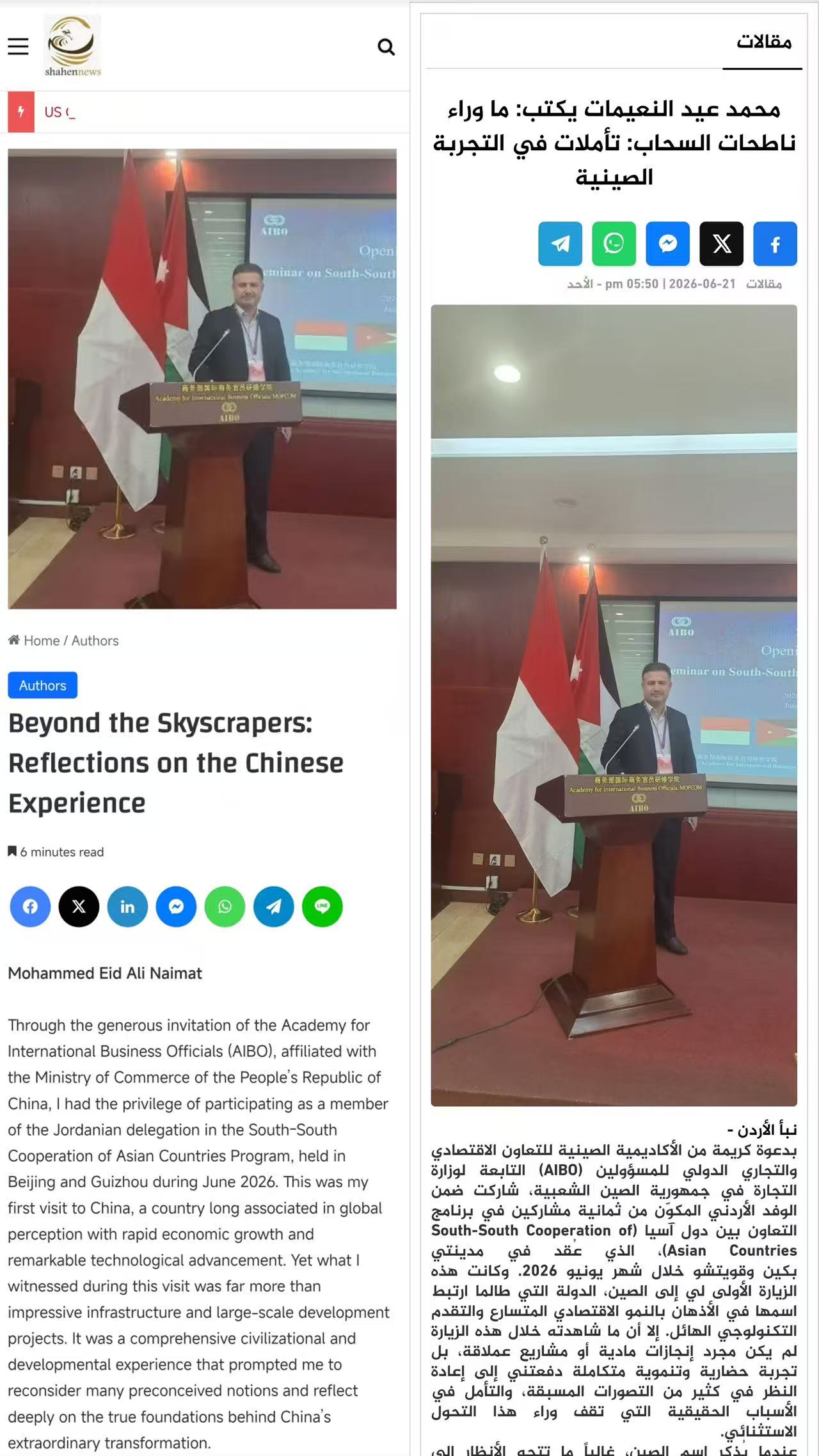
Through the generous invitation of the Academy for International Business Officials (AIBO), affiliated with the Ministry of Commerce of the People’s Republic of China, I had the privilege of participating in a Seminar on “South-South Cooperation”, held in Beijing and Guizhou from June 3 to 16, 2026.
This was my first visit to China, a country long associated in global perception with rapid economic growth and remarkable technological advancement. When China is mentioned, people often think of towering skyscrapers, sophisticated transportation networks, high-speed railways, and groundbreaking achievements in technology and artificial intelligence. While these accomplishments are undoubtedly impressive, they represent only the visible dimension of the Chinese story.
The essence of the Chinese experience, as I came to understand it, lies in a clear, long-term vision for the future, a collective commitment to hard work across society, and a culture that views development not as a short-term project but as a long-term endeavor. This culture showcases patient perseverance, strict discipline, and fully embodies a people-centered development philosophy.
Throughout the program, we gained an in-depth understanding of China's practical experiences in economics, society, and technology, and listened to experts share insights into China's development journey. It became evident that China's current achievements are the result of the joint action of long-term strategic planning, clearly defined objectives, and efficient execution.
Development in China is not merely reflected in economic data; it is even more visible in the happiness and sense of gain of the people. The achievements in infrastructure construction, such as modern transportation networks and extensive public service systems, vividly demonstrate the fruits of China's development.Adhering to a people-centered approach and taking the improvement of people's livelihoods as the starting point and ultimate goal is the core of China's successful experience.
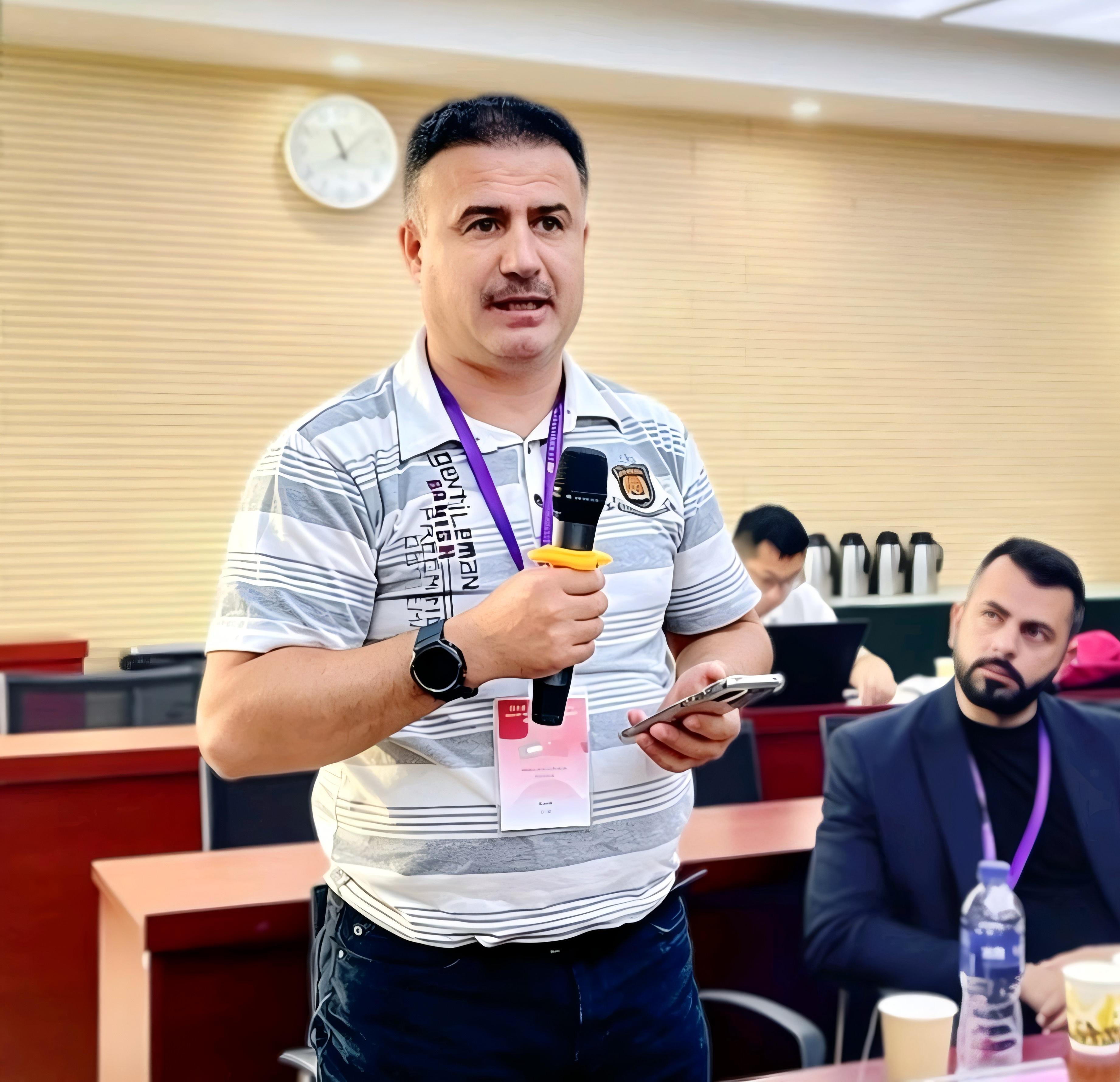
I was also deeply impressed by the high level of organization and discipline in Chinese society. From arrival to departure, in public spaces and various institutions, one could feel the respect for time, adherence to rules, and commitment to work. I gradually realized that this spirit of discipline is not merely an individual quality, but a collective value rooted in societal culture, providing vital support for China's development.In Beijing, I witnessed a remarkable balance: the harmonious coexistence of tradition and modernity. Walking through the Forbidden City and the historic neighborhoods of old Beijing, one experiences the profound heritage of a civilization spanning thousands of years.Yet only minutes away stand modern business districts, innovation centers, and impressive skyscrapers. This made me deeply realize that China has not exchanged modernization at the cost of its history and culture; rather, it has used its rich historical traditions as an important foundation for stepping into the future. Visiting the Museum of the Communist Party of China was deeply inspiring. Through documents, photographs, and exhibits, I systematically learned about China's magnificent development journey and the challenges and transformations it faced. The museum not only presents history but also helped me understand the importance of long-term planning, firm conviction, and sustained struggle. It demonstrated how a country, with strategic vision and unremitting efforts, can transform difficulties into opportunities and dreams into reality. I profoundly recognized that China's current economic takeoff and technological progress are the inevitable results of long-term struggle and strategic accumulation.
Our visit to Guizhou Province left an extremely deep impression on me. Guizhou showcases China's rich and diverse geographical features with its breathtaking natural beauty, green mountains, and unique ecological environment. At the same time, it has emerged as an important base for big data industries, the digital economy, and modern technological development.We witnessed firsthand how a region that once faced geographical constraints successfully transformed into a dynamic development highland through technological innovation, knowledge investment, and infrastructure construction.
What impressed me even more was that Guizhou's development is reflected not only in the scale of its projects but also in its emphasis on ecological environmental protection and the development of rural areas. We saw how development outcomes reached grassroots communities, improving living standards, creating employment opportunities, and enhancing public service quality. This reinforced my belief that the fundamental standard for measuring development effectiveness lies not only in the prosperity level of major cities but, more importantly, in whether development outcomes can truly benefit all groups and regions of society.
Although we conducted field visits to numerous high-tech enterprises and modern facilities, what touched us most deeply and left the most lasting impression was always the spiritual ethos of the Chinese people. The friendly character, warm attitude, and sincere feelings displayed by the Chinese people won our heartfelt admiration. Whether at transportation hubs, on city streets, or in the various institutions we visited, the Chinese people treated us with courtesy and warm welcomes, fully demonstrating the civilized qualities and spiritual ethos of the Chinese nation.
What touched me especially was that this friendliness was by no means a passive response to requests, but a proactive care from the heart. Before we even opened our mouths to ask for help, people voluntarily extended a helping hand, offered directions, and expressed their welcome. Even when there were occasional language barriers, genuine smiles and a sincere willingness to help bridged any cultural and linguistic divide. This warm humanistic care made me deeply realize that the strength of a society is reflected not only in its economic power and technological level but also in the values it upholds and the way people interact harmoniously.
Through this seminar, I realized that the Chinese development experience is not a model that can be simply replicated, as every nation has its own national conditions and unique development path. However, the advanced concepts within the Chinese experience are worthy of reference for developing countries, such as adhering to long-term planning, valuing education, promoting the integration of technology with needs, and maintaining cultural confidence and national characteristics. During my time in China, whether through urban construction practices, seminar courses, or reflections at the Museum of CPC, I felt China's firm belief in the future and its sense of mission to strive for the next generation.
This conviction and sense of responsibility inject vitality into China's development, enabling it to present a systematic, coordinated, and steady progression over its long-term struggle. The diligence, friendliness, and sense of responsibility of the Chinese people also command my deep admiration. This journey has made me even more convinced that great achievements begin with a clear vision and the people's confidence in their country's future.
I would like to express my sincere gratitude to the Government of the People’s Republic of China, the Ministry of Commerce, the Chinese Embassy in Jordan, and the Academy for International Business Officials (AIBO) for their efforts in promoting friendship, cooperation, and mutual understanding between our two nations, particularly for their professional organization and attentive service.
Long live the Jordanian-Chinese friendship!


